Story
10 December 2025
UNEA-7 commences in Nairobi with Kenya at the Centre of Global Environmental Action
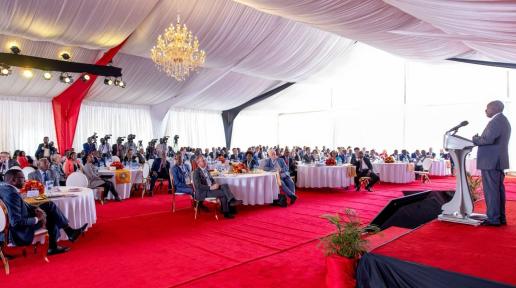
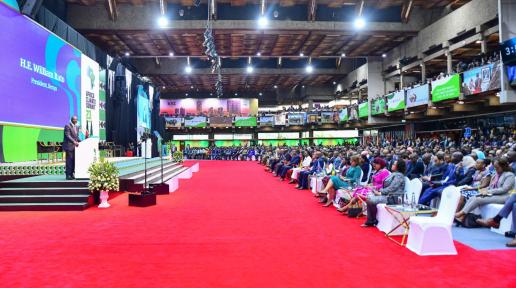
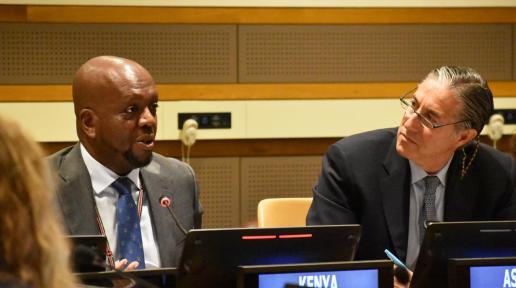
The seventh session of the United Nations Environment Assembly (UNEA-7) commenced in Nairobi after a week of intensive negotiations, high-level dialogues, youth engagement and renewed calls for decisive global action. Nearly 6,000 delegates from more than 170 countries are meeting at the United Nations Environment Programme (UNEP) headquarters from 8 to 12 December to deliberate on the theme “Advancing Sustainable Solutions for a Resilient Planet.”The Assembly convenes at a moment shaped by accelerating climate shocks, pollution burdens, biodiversity decline and the widening gap between scientific warnings and the global response. Delegates are examining a broad range of resolutions on artificial intelligence, chemical and waste governance, sustainable management of minerals and metals, transboundary freshwater cooperation, circular economy pathways, wildfire management, ocean governance, migratory species and climate justice.In her opening message, UN Deputy Secretary-General Amina Mohammed urged countries to act decisively to safeguard ecosystems and the stability of communities worldwide. UNEA-7 President Abdullah Bin Ali Al-Amri echoed this appeal throughout the week, emphasising the need for science-driven consensus, trust and fairness. “Our success depends not only on what we adopt but on how we reach it,” he reminded delegates.
Nairobi’s Role and Kenya’s LeadershipHosting UNEA-7 reaffirmed Nairobi’s long-standing position as the world’s environmental capital and the permanent home of UNEP. Kenya’s partnership with UNEP spans more than five decades and this year’s Assembly placed the country at the centre of multilateral action.In her opening address, Cabinet Secretary for Environment, Climate Change and Forestry, Dr Deborah Barasa, set a decisive tone for the Assembly and established Kenya’s leadership as both host and active contributor to global environmental governance. She reminded delegates that Nairobi is not only the home of UNEP but also the place where many of the world’s most significant environmental agreements have been shaped.UNEA-7 must not only talk about the future, it must help create it.Dr Barasa’s call to action was clear. “The era of small, cautious steps has passed,” she said. “UNEA-7 must not only talk about the future, it must help create it.” She grounded this message in the lived realities of communities facing rising heat, prolonged droughts, land degradation and polluted environments. Her remarks underscored that environmental crises are not abstract global concerns but daily lived experiences for millions across Africa. Kenya played an active leadership role throughout the Assembly. The country sponsored three resolutions and co-sponsored two others, advancing global action on antimicrobial resistance, the environmental footprint of artificial intelligence and the use of sport to promote environmental stewardship. Dr Barasa underscored the importance of inclusive governance, stressing that environmental decisions must include women, youth, Indigenous Peoples and marginalised communities.UNEA-7 takes place as African nations continue to face profound environmental and economic pressures. UNEP assessments indicate that Africa loses between five and fifteen percent of GDP each year to climate impacts, pollution and ecosystem decline. These losses remain visible in droughts across the Horn of Africa, destructive floods in West and North Africa, falling hydropower output and rapid coastal erosion.African negotiators, including Kenya, are using the Assembly to highlight the need for financing reforms, streamlined reporting frameworks and global policies that reflect the realities of countries facing overlapping crises and constrained fiscal space.A distinguishing feature of this year’s Assembly was the scale of youth engagement. The Global Youth Declaration, endorsed by more than 2,000 youth organisations, called for fundamental reforms in environmental governance, stronger integration of science into decision-making and more meaningful roles for young people in shaping global policy.Young Africans raised concerns about land degradation, water scarcity, safety risks for environmental defenders and the governance of critical minerals as the continent expands renewable-energy and e-mobility sectors. Their interventions helped ensure that the outcomes of UNEA-7 reflected both scientific evidence and lived realities.Negotiations, Outcomes and GEO-7Over five days, delegates will examine 15 draft resolutions and three draft decisions aimed at strengthening environmental multilateralism. The Assembly also featured the launch of the seventh Global Environment Outlook (GEO-7), which outlined integrated pathways across waste and circularity, food systems, energy transitions and environmental governance.The high-level segment brought together heads of state and ministers from across the world. Kenya also co-hosted discussions on circular economy transitions and actions to end plastic pollution, building on Nairobi’s legacy as the birthplace of the global plastics treaty mandate.As host and an active participant, Kenya demonstrated its commitment to shaping global environmental direction, showcasing major restoration programmes, including the national 15-billion-tree initiative and took part in leadership dialogues on climate action, chemicals and waste, biodiversity and land restoration.Dr Barasa further emphasised that partnership, fairness and scientific credibility must guide global action. She reiterated Kenya’s call for inclusive decision-making and for solutions that reflect the needs of developing countries. Kenya also strengthened Africa’s collective voice on climate finance, sustainable resource management and equitable energy transitions.UNEA-7 leaves the global community with a renewed understanding of both the urgency of the triple planetary crisis and the possibilities of multilateral cooperation. For Kenya, the Assembly strengthened its position as a regional and global leader in environmental governance. For the world, it marks a test of whether multilateralism can continue to deliver the scale of action needed to confront rising climate threats, biodiversity loss and pollution.As delegates depart Nairobi, the message remains clear. The challenges are complex and interconnected, yet the resolve shown at UNEA-7 demonstrates that collective action is still possible and still urgently required to secure a resilient planet for present and future generations.
Nairobi’s Role and Kenya’s LeadershipHosting UNEA-7 reaffirmed Nairobi’s long-standing position as the world’s environmental capital and the permanent home of UNEP. Kenya’s partnership with UNEP spans more than five decades and this year’s Assembly placed the country at the centre of multilateral action.In her opening address, Cabinet Secretary for Environment, Climate Change and Forestry, Dr Deborah Barasa, set a decisive tone for the Assembly and established Kenya’s leadership as both host and active contributor to global environmental governance. She reminded delegates that Nairobi is not only the home of UNEP but also the place where many of the world’s most significant environmental agreements have been shaped.UNEA-7 must not only talk about the future, it must help create it.Dr Barasa’s call to action was clear. “The era of small, cautious steps has passed,” she said. “UNEA-7 must not only talk about the future, it must help create it.” She grounded this message in the lived realities of communities facing rising heat, prolonged droughts, land degradation and polluted environments. Her remarks underscored that environmental crises are not abstract global concerns but daily lived experiences for millions across Africa. Kenya played an active leadership role throughout the Assembly. The country sponsored three resolutions and co-sponsored two others, advancing global action on antimicrobial resistance, the environmental footprint of artificial intelligence and the use of sport to promote environmental stewardship. Dr Barasa underscored the importance of inclusive governance, stressing that environmental decisions must include women, youth, Indigenous Peoples and marginalised communities.UNEA-7 takes place as African nations continue to face profound environmental and economic pressures. UNEP assessments indicate that Africa loses between five and fifteen percent of GDP each year to climate impacts, pollution and ecosystem decline. These losses remain visible in droughts across the Horn of Africa, destructive floods in West and North Africa, falling hydropower output and rapid coastal erosion.African negotiators, including Kenya, are using the Assembly to highlight the need for financing reforms, streamlined reporting frameworks and global policies that reflect the realities of countries facing overlapping crises and constrained fiscal space.A distinguishing feature of this year’s Assembly was the scale of youth engagement. The Global Youth Declaration, endorsed by more than 2,000 youth organisations, called for fundamental reforms in environmental governance, stronger integration of science into decision-making and more meaningful roles for young people in shaping global policy.Young Africans raised concerns about land degradation, water scarcity, safety risks for environmental defenders and the governance of critical minerals as the continent expands renewable-energy and e-mobility sectors. Their interventions helped ensure that the outcomes of UNEA-7 reflected both scientific evidence and lived realities.Negotiations, Outcomes and GEO-7Over five days, delegates will examine 15 draft resolutions and three draft decisions aimed at strengthening environmental multilateralism. The Assembly also featured the launch of the seventh Global Environment Outlook (GEO-7), which outlined integrated pathways across waste and circularity, food systems, energy transitions and environmental governance.The high-level segment brought together heads of state and ministers from across the world. Kenya also co-hosted discussions on circular economy transitions and actions to end plastic pollution, building on Nairobi’s legacy as the birthplace of the global plastics treaty mandate.As host and an active participant, Kenya demonstrated its commitment to shaping global environmental direction, showcasing major restoration programmes, including the national 15-billion-tree initiative and took part in leadership dialogues on climate action, chemicals and waste, biodiversity and land restoration.Dr Barasa further emphasised that partnership, fairness and scientific credibility must guide global action. She reiterated Kenya’s call for inclusive decision-making and for solutions that reflect the needs of developing countries. Kenya also strengthened Africa’s collective voice on climate finance, sustainable resource management and equitable energy transitions.UNEA-7 leaves the global community with a renewed understanding of both the urgency of the triple planetary crisis and the possibilities of multilateral cooperation. For Kenya, the Assembly strengthened its position as a regional and global leader in environmental governance. For the world, it marks a test of whether multilateralism can continue to deliver the scale of action needed to confront rising climate threats, biodiversity loss and pollution.As delegates depart Nairobi, the message remains clear. The challenges are complex and interconnected, yet the resolve shown at UNEA-7 demonstrates that collective action is still possible and still urgently required to secure a resilient planet for present and future generations.