Story
01 October 2026
Kenya leads push for climate finance in informal settlements
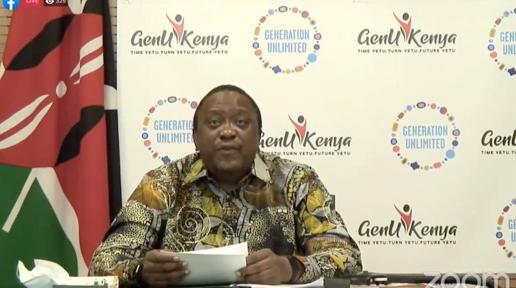
When the long rains come, climate risk becomes immediate in Kenya’s informal settlements. Floodwater can enter homes, interrupt work, damage livelihoods and expose families to contaminated water. But flooding is only one part of the risk. Many communities also face extreme heat, inadequate infrastructure and limited access to basic services.These are climate adaptation challenges as much as housing problems. Resilience can mean safer homes, better drainage, water and sanitation, public spaces, municipal services and stronger local livelihoods. The people most exposed to climate shocks are often the same people least able to absorb the cost of recovery.On 23 September, at UN Headquarters in New York, the Government of Kenya convened leaders, climate finance institutions, development partners and the private sector to mobilise support for Building Climate Resilience with the Urban Poor (BCRUP). The programme began in 2019 under the UN Secretary-General’s Climate Ambition initiative, with Kenya and Brazil as co-leads.“Climate action must work for the people who feel its impact the most,” said Musalia Mudavadi, Prime Cabinet Secretary and Cabinet Secretary for Foreign and Diaspora Affairs. “Our approach must be locally driven and shaped by the people who understand these challenges firsthand, particularly young people whose future will be defined by the cities we build today.”“Climate action must work for the people who feel its impact the most.”
— PCS Musalia Mudavadi. Climate finance comes in several forms. It can include grants, concessional lending, guarantees and other public and private investment. In informal settlements, the challenge is that resilience rarely comes as one large project with one owner. It may require safer housing, drainage, water and sanitation, public spaces, stronger municipal services, financing for local businesses and better information about climate risk.BCRUP is designed to bring those needs together into neighbourhood investment plans and project pipelines, a ready list of projects that governments, climate funds and financial institutions can assess and finance. Its four work areas are climate-resilient settlements and infrastructure; inclusive economic opportunities and green jobs; climate finance and investment; and knowledge, partnerships and skills.President William Ruto launched BCRUP as a programme at the first Africa Climate Summit in Nairobi in 2023. Twenty African countries are now participating, with 60 neighbourhoods selected for the initial phase.In New York, Kenya unveiled three parts of the architecture intended to move BCRUP towards implementation: the Governance Structure, Operational Framework and Resource Mobilisation Strategy; a Green Climate Fund-supported Regional Readiness Project to strengthen project pipelines across participating countries; and a BCRUP-Joint SDG Fund implementation programme.In Kenya, the Joint SDG Fund is providing US$3 million in grant finance. The grant is meant to unlock additional public and private investment rather than carry the programme alone, with a floor of at least eight dollars for every UN dollar. At full ambition, the Resident Coordinator’s remarks set out up to US$39 million from Kenyan banks and US$3.3 million from the National Treasury and counties.“Seven years on, BCRUP is no longer a commitment. It is a facility, ready for investment,” said Lisa Kurbiel, Head of the Joint SDG Fund Secretariat, who delivered remarks on behalf of the UN Resident Coordinator.UN-Habitat will host the facility. The UN Development Programme (UNDP) will support small enterprises. The UN Office for Disaster Risk Reduction (UNDRR) will build climate risk information into every investment. Over 36 months, the programme aims to improve services for 600,000 people in six counties, finance 10,000 small businesses and create 20,000 green jobs.
For Dr Garry Conille, United Nations Resident Coordinator in Kenya, the measure of success is what changes on the ground. “Success will not be measured by the dollars announced this morning,” he said. “It will be measured by whether a mother’s one-room home stays dry through the long rains. Whether the woman who runs the corner shop gets credit she can repay. Whether a young person finds work building the city, rather than fleeing its floods.”“Success will not be measured by the dollars announced this morning. It will be measured by whether a mother’s one-room home stays dry through the long rains.”
— UN RC, Dr Garry Conille.The financing model will matter as much as the amount mobilised. Public infrastructure, resilient housing and small-enterprise finance cannot all be treated in the same way. Nor can decisions about what gets built first be separated from the people who live there. BCRUP is explicitly designed around locally led action. The next test is whether counties and communities retain that influence as projects move from plans to implementation.Kenya is expected to carry the financing conversation into COP31 in Antalya, Türkiye and COP32 in Ethiopia. By then, the question that matters will be what has begun to change on the ground.
— PCS Musalia Mudavadi. Climate finance comes in several forms. It can include grants, concessional lending, guarantees and other public and private investment. In informal settlements, the challenge is that resilience rarely comes as one large project with one owner. It may require safer housing, drainage, water and sanitation, public spaces, stronger municipal services, financing for local businesses and better information about climate risk.BCRUP is designed to bring those needs together into neighbourhood investment plans and project pipelines, a ready list of projects that governments, climate funds and financial institutions can assess and finance. Its four work areas are climate-resilient settlements and infrastructure; inclusive economic opportunities and green jobs; climate finance and investment; and knowledge, partnerships and skills.President William Ruto launched BCRUP as a programme at the first Africa Climate Summit in Nairobi in 2023. Twenty African countries are now participating, with 60 neighbourhoods selected for the initial phase.In New York, Kenya unveiled three parts of the architecture intended to move BCRUP towards implementation: the Governance Structure, Operational Framework and Resource Mobilisation Strategy; a Green Climate Fund-supported Regional Readiness Project to strengthen project pipelines across participating countries; and a BCRUP-Joint SDG Fund implementation programme.In Kenya, the Joint SDG Fund is providing US$3 million in grant finance. The grant is meant to unlock additional public and private investment rather than carry the programme alone, with a floor of at least eight dollars for every UN dollar. At full ambition, the Resident Coordinator’s remarks set out up to US$39 million from Kenyan banks and US$3.3 million from the National Treasury and counties.“Seven years on, BCRUP is no longer a commitment. It is a facility, ready for investment,” said Lisa Kurbiel, Head of the Joint SDG Fund Secretariat, who delivered remarks on behalf of the UN Resident Coordinator.UN-Habitat will host the facility. The UN Development Programme (UNDP) will support small enterprises. The UN Office for Disaster Risk Reduction (UNDRR) will build climate risk information into every investment. Over 36 months, the programme aims to improve services for 600,000 people in six counties, finance 10,000 small businesses and create 20,000 green jobs.
For Dr Garry Conille, United Nations Resident Coordinator in Kenya, the measure of success is what changes on the ground. “Success will not be measured by the dollars announced this morning,” he said. “It will be measured by whether a mother’s one-room home stays dry through the long rains. Whether the woman who runs the corner shop gets credit she can repay. Whether a young person finds work building the city, rather than fleeing its floods.”“Success will not be measured by the dollars announced this morning. It will be measured by whether a mother’s one-room home stays dry through the long rains.”
— UN RC, Dr Garry Conille.The financing model will matter as much as the amount mobilised. Public infrastructure, resilient housing and small-enterprise finance cannot all be treated in the same way. Nor can decisions about what gets built first be separated from the people who live there. BCRUP is explicitly designed around locally led action. The next test is whether counties and communities retain that influence as projects move from plans to implementation.Kenya is expected to carry the financing conversation into COP31 in Antalya, Türkiye and COP32 in Ethiopia. By then, the question that matters will be what has begun to change on the ground.